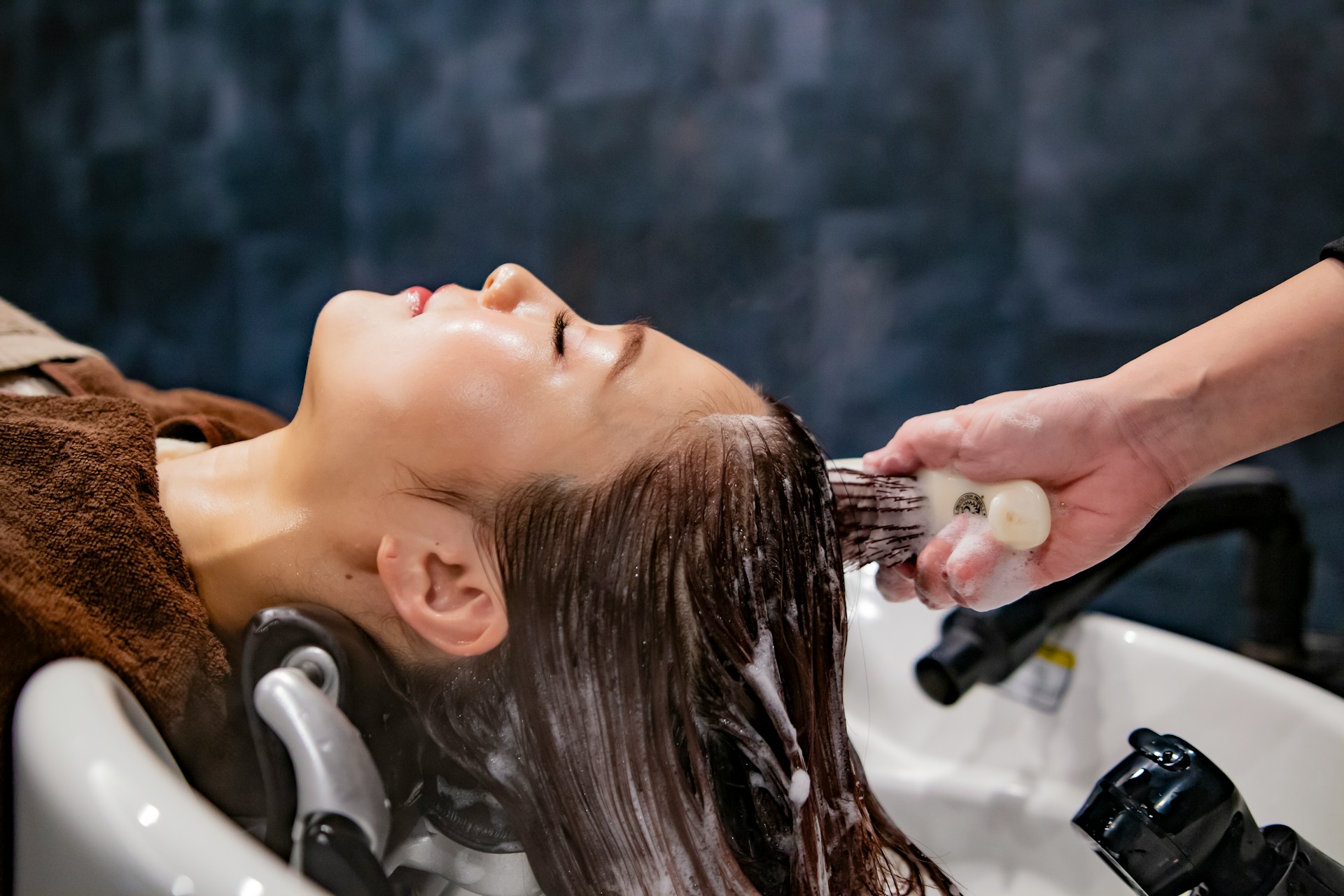
If you’ve ever checked the weather app, seen “humidity 88%,” and instantly knew your hair was doomed, you’re in the right place. Frizz isn’t just a “bad hair day” issue; for many people—especially those already managing anxiety, depression, or body image struggles—it can feel like one more thing that’s out of your control.
Keratin treatments promise glassy, smooth hair that laughs in the face of humidity. But you’ve probably also seen the horror stories: breakage, fumes, or “my curls never came back.” This article cuts through the noise with an evidence-based guide to keratin treatments used safely and sanely—including how to treat and cure common issues like damage or reversion—grounded in mindful, realistic beauty rather than perfectionism.
What a Keratin Treatment Really Does (And Why Frizz Happens in the First Place)
Let’s start with science in plain language.
Why hair frizzes
Hair is made mostly of a protein called keratin. Each strand has an outer layer (the cuticle) made of overlapping “scales.” When those scales lie flat, light reflects evenly and hair looks shiny and smooth. When they lift—because of:
- Humidity
- Heat damage
- Chemical processing
- Mechanical stress (rough brushing, tight elastics)
Curly and oily hair tends to frizz more not because it’s “worse” hair, but because the bends and twists make the cuticle naturally a bit more vulnerable and the scalp’s natural oils don’t glide down as easily.
What a keratin treatment actually is
Despite the name, most modern keratin treatments are smoothing systems, not just “pure” keratin. Typically, they include:
- Hydrolyzed keratin or other proteins to temporarily fill in gaps along the cuticle
- A crosslinking or bonding agent that helps lock the hair into a smoother shape
- Heat (flat ironing, usually 400°F / 204°C or less) to “set” that smoother structure
The goal isn’t always pin‑straight hair; its more humidity-resistant smoothness with reduced drying time and easier styling.
What clinical research says
Several small but credible clinical and cosmetic science studies have shown that professional keratin-based smoothing treatments can:
- Reduce volume and frizz for 2–4 months
- Improve combability and reduce drying time
- Increase shine and smoothness, even in high humidity challenges used in lab testing
For example, a 2018 cosmetic science review looked at salon smoothing systems and documented measurable improvements in humidity resistance and reduced hair fiber swelling after treatment. Another study using high-humidity chambers found marked frizz reduction for up to three months in subjects who’d received a salon keratin-based system compared to controls.
The catch: some older or poorly formulated systems used high levels of formaldehyde or “formaldehyde-releasing” ingredients, which raised real safety concerns for both stylists and clients. Many brands have since reformulated, but ingredient lists still matter.
If you care about wellness in a broad sense (mental and physical), this is where mindful beauty comes in—choosing options that respect both your hair and your overall health, not just the “after” photo.

A Simple 5‑Step Protocol for a Healthy, Effective Keratin Treatment
Think of this as your “frizz game plan”—whether you go to a salon or try an at‑home kit.
Step 1: Evaluate your starting point
Take a brutally honest look at your hair:
- Texture: Fine, medium, coarse? Curly, wavy, coily, relaxed?
- Condition: Color-treated, bleached, or previously straightened? Breakage or shedding?
- Scalp health: Flaking, itch, or sensitivity?
If your hair is breaking easily, shedding heavily, or feels like “cotton candy,” a strong keratin treatment is too much right now. Focus on repair first: gentle cleansing, protein‑balanced masks, and reducing heat.
Step 2: Choose the right type of treatment
There are three main categories:
- Salon keratin/smoothing treatments
- Longest-lasting (up to 3–4 months)
- Most consistent results
- Best choice if your hair is very frizz-prone and you live in a humid climate
- Cost: moderate to high
- If you’re near Georgia and want professional help, looking for an affordable keratin treatment near Atlanta can be a smart way to find vetted stylists who know how to balance smoothness with hair health instead of going purely for ultra-straight results.
- At‑home keratin-inspired smoothing kits
- Shorter-lived (4–8 weeks)
- Lower cost
- Useful if you’re testing whether you even like smoother hair
- Results more subtle and dependent on your technique
- Keratin-infused shampoos, conditioners, and masks
- Don’t dramatically change hair structure, but can:
- Reduce surface frizz
- Improve shine and manageability
- Best as maintenance or for those wary of strong chemical services
- Don’t dramatically change hair structure, but can:
Step 3: Prep like it’s a skin-care routine
Just as you wouldn’t throw a strong acid peel on angry skin, you don’t want to “shock” your hair.
- Use a clarifying shampoo 24–48 hours before (or as directed by your stylist) to remove buildup
- Skip oils and heavy masks right before the appointment
- Take photos of your hair on a humid day—that’s your “baseline” to judge realistic results later
- If you’re sensitive, patch test products on a small area of skin behind the ear
Step 4: Respect the post-treatment rules
Most modern keratin systems have fewer strict rules than the old “don’t wash for three days, don’t tuck your hair behind your ears” era, but your stylist’s aftercare guidance still matters. Common recommendations:
- Use sulfate-free, low‑lather shampoos to avoid stripping the treatment prematurely
- Avoid saltwater and chlorinated pools for at least the first week (or use a swim cap and pre‑wet your hair with tap water)
- Keep heat styling to moderate temperatures; you no longer need extreme heat to reduce frizz
Think of it as protecting your investment—financial and emotional. When your routine is simple and intentional, it becomes a piece of your overall self‑care, not a new obsession.
Step 5: Build a realistic styling routine
Once the keratin treatment settles, your daily routine should feel easier, not more complicated:
- Air‑dry partially, then blow‑dry on low with a nozzle and gentle tension
- Use a lightweight leave‑in with heat protection
- Limit wash days if your scalp allows; every 2–3 days is ideal for many people post‑keratin
Seasonal Frizz Fighters: Adjusting Your Routine Throughout the Year
Frizz is seasonal, even if your stress isn’t. Some quick, practical adjustments:
Summer: Humidity overload
- Add a humidity-blocking serum with film‑forming ingredients (e.g., polyquaterniums, certain silicones)
- Wear protective styles (braids, buns) when you know you’ll be outdoors for hours
- Rinse hair with cool water after swimming and follow with a gentle, chelating rinse if you’re in pools a lot
Winter: Frizz + dryness combo
- Indoor heating + cold air can rough up the cuticle while also drying your hair out
- Use slightly richer conditioners and leave‑ins
- Try a weekly mask with a mix of protein (to support structure) and emollients (to keep flexibility)
Transitional seasons: Spring and fall
- This is when your keratin treatment and regular styling may clash with unpredictable weather
- Consider light, layerable products instead of heavy creams: a bit of cream + a bit of serum gives you control without flatness
Smart Product Picks and Maintenance Tips (Minus the Hype)
Rather than endorsing a specific brand line by line, here’s what to look for:
For cleansers and conditioners
- Sulfate-free surfactants (e.g., sodium cocoyl isethionate, cocamidopropyl betaine)
- Label mentions “color-safe,” “smoothing,” or “keratin-safe”
- Avoid frequent use of harsh clarifying shampoos; use them every few weeks at most
For leave-ins and stylers
- Look for terms like “anti-humidity,” “frizz control,” or “smoothing”
- Ingredients that can help:
- Hydrolyzed keratin or other proteins in small amounts
- Film-forming agents that don’t feel too stiff
- Heat protectants for up to the temperature you actually use
Internal vs. external care
Your hair is also a bit of a health report card. While no supplement replaces professional mental health care, simple pillars—hydration, enough protein in your diet, managing chronic stress with tools like therapy or mindfulness—often show up in more resilient hair over time.
For deeper reading on hair and scalp health science, the American Academy of Dermatology regularly publishes accessible information on hair disorders, treatments, and cosmetic practices.
Key Takeaways: Making Peace with Your Hair, Not War
To pull it all together:
- Keratin treatments can significantly reduce frizz and boost humidity resistance for 2–4 months when chosen and applied correctly.
- Clinical and cosmetic science research backs up reduced fiber swelling, easier combing, and improved smoothness, but safety still depends heavily on product formulation and salon practices.
- A simple 5‑step protocol—evaluating your hair, choosing the right system, prepping well, respecting aftercare, and building a realistic routine—goes a long way toward results that actually feel good in your life.
- Seasonal tweaks, smart ingredient choices, and healthy hair care habits matter just as much as the one big salon appointment.
- Most importantly, smoother hair should support your mental health, not become another arena for perfectionism or self‑criticism.
