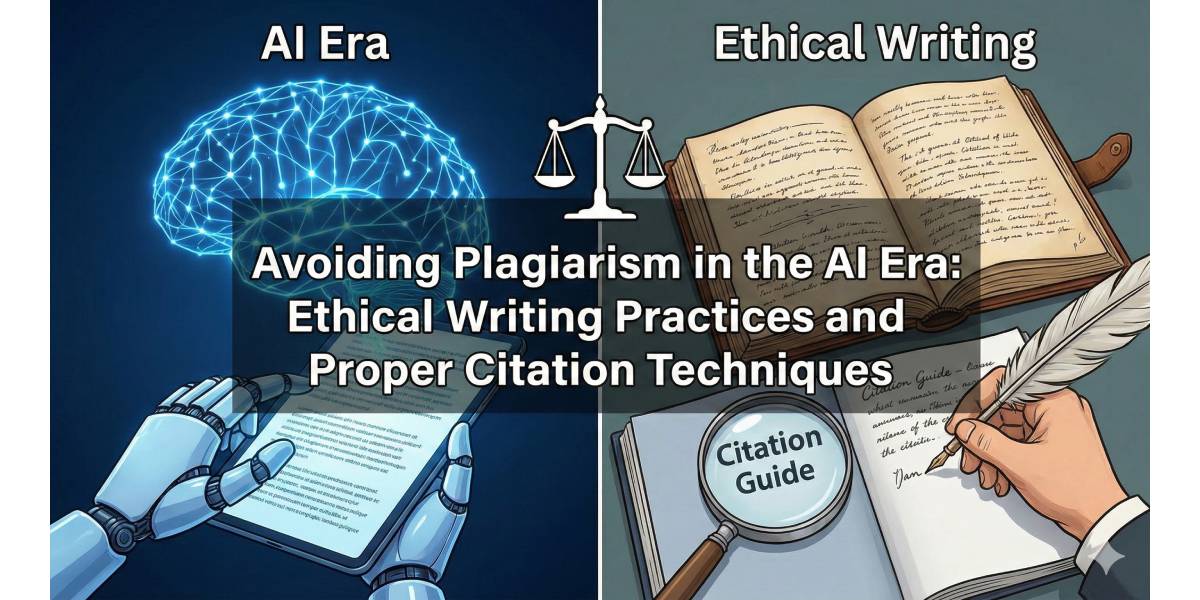
Artificial intelligence has transformed the way we write, research, and learn. From AI-powered writing assistants to automated research tools, content creation has become faster and more accessible than ever before. However, this rapid advancement has also introduced a critical challenge for students, educators, and professionals alike: plagiarism in the AI era.
As AI-generated content becomes increasingly common, the lines between original work, assisted writing, and plagiarism are becoming blurred. This makes ethical writing practices and proper citation techniques more important than ever.
In this article, we’ll explore how plagiarism is evolving in the age of AI, why ethical writing matters, and how to maintain academic and professional integrity while using modern tools responsibly.
Understanding Plagiarism in the Age of AI
Plagiarism has traditionally meant presenting someone else’s words or ideas as your own without proper acknowledgment. In the AI era, plagiarism can take new and less obvious forms.
Common AI-Era Plagiarism Risks
- Submitting AI-generated text as entirely original work
- Paraphrasing AI output without understanding or verifying it
- Reusing content generated from the same prompts across multiple submissions
- Failing to cite original sources referenced indirectly by AI tools
Even when content is generated by a machine, the responsibility for originality still lies with the user.
Why Ethical Writing Matters More Than Ever
Ethical writing is not just an academic requirement, it’s a reflection of credibility, professionalism, and trust.
Key Reasons Ethical Writing Is Essential
- Academic integrity: Universities and institutions increasingly monitor AI misuse.
- Skill development: Overreliance on AI can weaken critical thinking and writing skills.
- Professional reputation: Ethical lapses can damage careers and credibility.
- Legal and compliance risks: Plagiarism can result in penalties, failed assessments, or legal issues.
AI is a tool not a replacement for original thought.
The Difference Between AI Assistance and Plagiarism
Using AI does not automatically mean plagiarism. The distinction lies in how the tool is used.
Ethical Use of AI Includes:
- Brainstorming ideas and outlines
- Improving grammar and clarity
- Summarizing complex concepts for understanding
- Assisting with structure and flow
Unethical Use Includes:
- Copying AI output verbatim and submitting it as your own
- Using AI to bypass learning or assessment objectives
- Masking AI-generated content as personal research
Transparency and accountability are key.
Proper Citation in the AI Era: Why It’s Still Crucial
AI tools often generate content based on vast datasets, including published research, articles, and academic material. While AI does not directly “cite” sources, the ideas it produces often originate from existing knowledge.
That’s why proper citation remains essential, even when AI is involved.
When Should You Cite?
- When using specific data, statistics, or studies
- When referencing theories, models, or established ideas
- When paraphrasing content inspired by external sources
- When using AI-assisted summaries of existing research
If the idea didn’t originate from you, it should be cited.
Best Practices for Ethical Writing with AI Tools
1. Use AI as a Support, Not a Substitute
AI should assist your thinking, not replace it. Always:
- Add your own analysis and perspective
- Rewrite content in your own voice
- Verify facts independently
Think of AI as a research assistant, not the author.
2. Always Review and Edit AI-Generated Content
Never submit AI-generated content without thorough review. Check for:
- Accuracy and outdated information
- Logical consistency
- Original phrasing
- Alignment with assignment guidelines
Blind trust in AI can lead to unintentional plagiarism.
3. Maintain Clear Notes and Source Tracking
When researching, keep track of:
- Articles, journals, and books consulted
- Websites and reports used
- Data sources and quotations
This makes proper citation easier and reduces the risk of accidental plagiarism.
4. Understand Your Institution’s AI Policy
Many universities now have specific guidelines regarding AI use. Some allow limited assistance, while others require disclosure.
Before using AI tools:
- Review institutional policies
- Ask instructors when in doubt
- Follow assignment-specific rules
Ethical compliance protects you from penalties.
Proper Citation Techniques Every Student Should Know
Citation styles may vary, but the principles remain the same.
Common Citation Styles
- APA (American Psychological Association)
- MLA (Modern Language Association)
- Harvard
- Chicago
Each style has specific rules for:
- In-text citations
- Reference lists
- Paraphrased content
- Direct quotations
Using the correct style consistently is just as important as citing at all.
Paraphrasing vs Plagiarism: Getting It Right
Paraphrasing is often misunderstood. Simply changing a few words is not enough.
Effective Paraphrasing Requires:
- Fully understanding the original idea
- Rewriting it in your own structure and language
- Retaining the original meaning accurately
- Citing the source appropriately
AI can help paraphrase, but responsibility for originality remains yours.
How Plagiarism Detection Tools Are Evolving
Modern plagiarism checkers don’t just look for exact matches. Many now analyze:
- Writing patterns
- Sentence structures
- Semantic similarity
- AI-generated text probability
This means AI-assisted plagiarism is becoming easier to detect. Ethical writing is not just the right choice, it’s the safest one.
The Role of Academic Support Services
With rising academic pressure, many students seek external support, but ethical boundaries must still be respected.
Reputable academic services focus on:
- Guidance and explanation
- Sample solutions for reference
- Editing and proofreading
- Concept clarification
Students seeking online assignment help in the UK should choose services that emphasize originality, proper citation, and ethical academic support rather than content submission shortcuts.
Teaching Ethical Writing in a Digital World
Educators also play a vital role in preventing plagiarism.
Effective approaches include:
- Teaching citation and paraphrasing early
- Designing critical-thinking–based assessments
- Encouraging transparency in AI usage
- Promoting learning over shortcuts
Ethical writing is a shared responsibility.
Building Long-Term Skills Instead of Short-Term Solutions
The goal of education and professional writing is not just to complete tasks—but to develop:
- Research skills
- Analytical thinking
- Clear communication
- Ethical judgment
AI can enhance these skills when used responsibly, but it can also undermine them when misused.
Final Thoughts: Integrity Is the Future of Writing
AI is not the enemy of originality, misuse is.
As technology continues to evolve, ethical writing practices and proper citation techniques will become even more important. Whether you’re a student, researcher, or professional, maintaining integrity in your work protects your credibility and future opportunities.
By using AI responsibly, citing sources correctly, and seeking ethical academic support—such as trustworthy online assignment help in the UK, you can benefit from modern tools without compromising honesty or originality.
In the AI era, how you write matters just as much as what you write.