When was the last time you checked for an FSSAI license number before ordering food online or buying packaged snacks? If you’re like most Indian consumers today, it’s probably become second nature. That small 14-digit number has transformed from a regulatory requirement into a powerful trust signal that can make or break a food business.
As someone who has worked with numerous food entrepreneurs over the years, I’ve witnessed firsthand how FSSAI registration has evolved from a mere compliance checkbox into a critical business asset. In this comprehensive guide, I’ll explain exactly how FSSAI registration builds customer trust and why it should be at the top of your priority list if you’re running any food-related business in India.
Understanding FSSAI Registration: More Than Just a License
The Food Safety and Standards Authority of India (FSSAI) was established in 2006 under the Food Safety and Standards Act to consolidate various food-related laws into a single framework. What started as a regulatory body has now become the guardian of food safety standards across the country.
FSSAI registration isn’t simply about avoiding penalties—it’s about demonstrating to your customers that you take their health and safety seriously. The FSSAI license serves as official recognition that your business meets the prescribed food safety standards and operates under government oversight.
There are three types of FSSAI licenses based on business scale:
- Basic Registration: For small businesses with an annual turnover up to Rs. 12 lakhs
- State License: For medium-scale businesses with turnover between Rs. 12 lakhs and Rs. 20 crores
- Central License: For large-scale operations exceeding Rs. 20 crores in annual turnover
Each category requires different documentation and compliance measures, but all serve the same fundamental purpose: assuring customers that the food they consume is safe.
The Trust Factor: Why Customers Care About FSSAI License
Consumer awareness about food safety has skyrocketed in recent years. News reports about food adulteration, unhygienic kitchen conditions, and foodborne illnesses have made customers increasingly vigilant about where their food comes from.
The Psychological Impact of Certification
Human psychology plays a fascinating role here. When customers see an FSSAI license displayed prominently, it triggers what behavioural economists call “authority bias”—our inherent tendency to trust certified and authorized entities. This certification acts as a mental shortcut, reducing the cognitive load required to evaluate whether a food establishment is trustworthy.
I’ve spoken with countless customers who admit they won’t even consider ordering from restaurants or cloud kitchens that don’t display their FSSAI license number. For them, the absence of this license raises immediate red flags about hygiene standards and business legitimacy.
Digital Era Amplification
The digital revolution has amplified the importance of FSSAI registration exponentially. Food delivery platforms like Zomato and Swiggy now mandate FSSAI license details for all partner restaurants. E-commerce platforms selling food products have similar requirements. This means your FSSAI license isn’t just displayed at your physical location, it’s scrutinized by thousands of potential customers browsing online.
Seven Ways FSSAI Registration Directly Builds Customer Trust
1. Demonstrates Legal Compliance and Accountability
Operating with proper FSSAI registration signals that your business respects the law and operates within established guidelines. Customers interpret this as a sign that you’re accountable for your products and services.
When issues arise—and in the food industry, they occasionally do—customers feel more confident approaching a registered business because there’s a clear regulatory framework and complaint mechanism in place. The FSSAI provides a structured grievance redressal system that protects consumer interests.
2. Provides Transparency About Business Operations
Your FSSAI license contains crucial information that customers value: your business name, address, license number, and validity period. This transparency is increasingly important to modern consumers who want to know exactly who’s preparing their food and where.
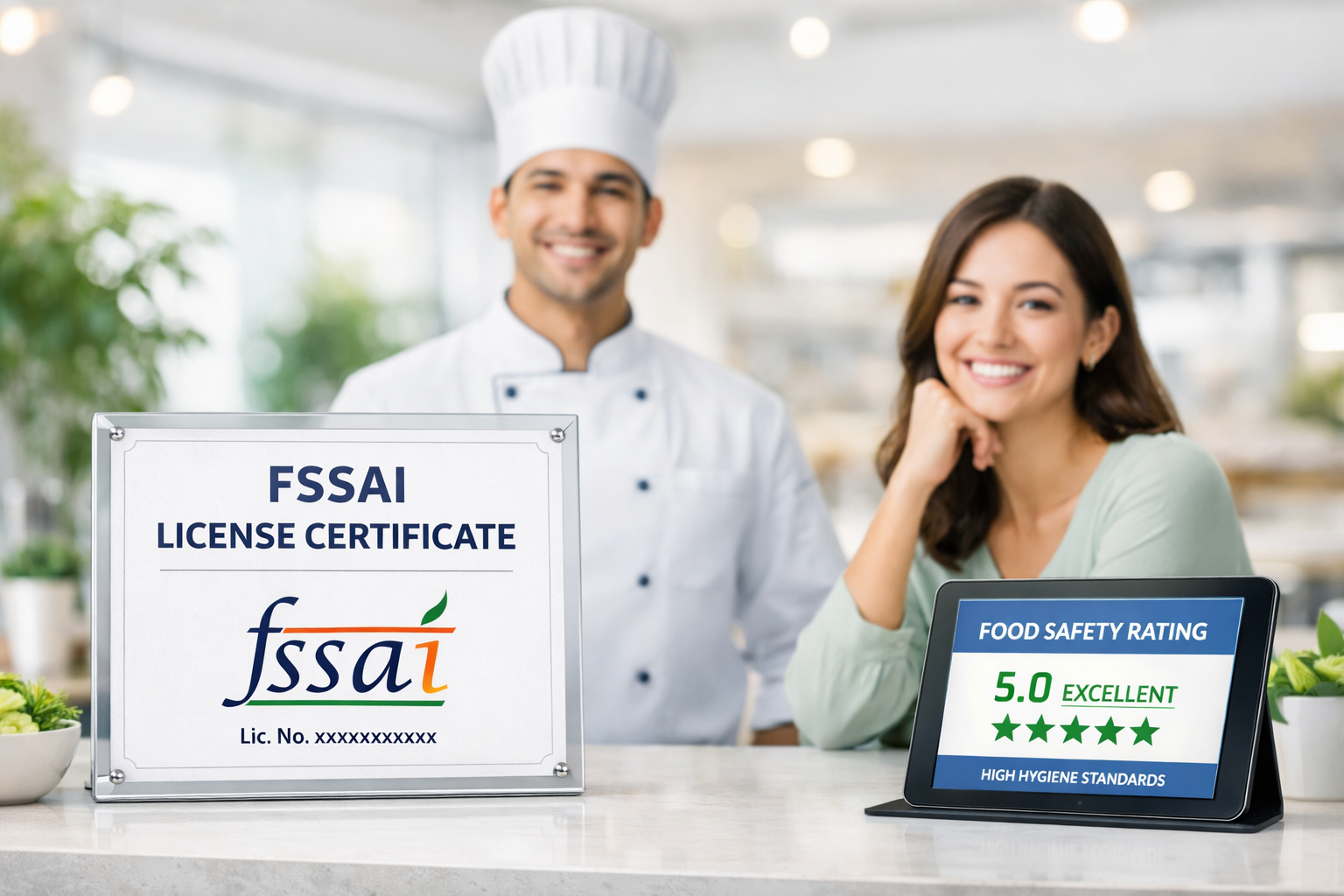
I’ve observed that businesses displaying their complete FSSAI details alongside hygiene ratings and certifications experience noticeably higher customer confidence. Transparency breeds trust, and your FSSAI registration is the foundation of that transparency.
3. Assures Quality Standards and Hygiene Practices
FSSAI registration requires businesses to maintain specific hygiene standards, proper storage facilities, and quality control measures. Customers understand that obtaining and maintaining an FSSAI license means regular inspections and adherence to prescribed safety protocols.
This assurance is particularly valuable for vulnerable customer segments—parents buying food for children, people with health conditions, or elderly consumers who are more susceptible to foodborne illnesses. For these customers, an FSSAI license provides essential peace of mind.
4. Enables Verification and Authenticity Checks
One of FSSAI’s most valuable features is its license verification system. Customers can visit the FSSAI website and verify whether a license number is genuine, check its validity status, and confirm business details.
This verification capability is powerful because it empowers customers. They’re not just taking your word for it—they can independently confirm your credentials. Businesses that proactively encourage customers to verify their FSSAI license demonstrate remarkable confidence in their operations.
5. Differentiates Your Business From Unregistered Competitors
In crowded marketplaces, particularly in the packaged food and cloud kitchen segments, differentiation is crucial. FSSAI registration immediately sets you apart from unlicensed operators cutting corners on safety standards.
I’ve worked with several startup food businesses that struggled initially but saw significant traction after obtaining their FSSAI license. The license became a key selling point in their marketing, giving quality-conscious customers a reason to choose them over cheaper, unregistered alternatives.
6. Builds Long-Term Brand Reputation
Trust accumulates slowly but can be destroyed instantly. FSSAI registration contributes to long-term brand building by consistently reinforcing your commitment to food safety across all customer touchpoints.
Customer reviews frequently mention FSSAI compliance when praising food businesses. Conversely, the absence of proper licensing often appears in negative reviews. Over time, this registration becomes intertwined with your brand identity, positioning you as a responsible, professional operation.
7. Facilitates Expansion and Scaling Opportunities
When you’re ready to expand, whether opening new locations, partnering with aggregators, or entering retail distribution, your FSSAI license becomes a prerequisite. Customers encountering your brand in new contexts will look for consistent trust signals, and your established FSSAI credentials provide that continuity.
Major retailers and institutional clients won’t even consider businesses without proper FSSAI registration. Your license opens doors to opportunities that would otherwise remain closed, allowing you to reach customers who prioritize certified suppliers.
Real-World Impact: What the Data Shows
Research conducted across Indian metropolitan areas reveals compelling statistics about FSSAI’s impact on consumer behaviour:
- Approximately 73% of urban consumers actively check for FSSAI license numbers before making first-time purchases from food businesses
- Restaurants and cloud kitchens with prominently displayed FSSAI details report 35-40% higher customer retention rates
- Food products with clear FSSAI license information on packaging see 25-30% better sales performance in organized retail
These numbers aren’t surprising when you consider that food safety concerns rank among the top three priorities for Indian consumers when choosing where to eat or what to buy.
Implementing FSSAI Registration: Practical Steps for Your Business
If you haven’t yet obtained your FSSAI license, or if you’re operating with an expired registration, here’s what you need to know:
Getting Started
The registration process begins with determining which category your business falls under based on annual turnover. You’ll need to gather essential documents including identity proof, business address proof, partnership deed or incorporation certificate, and a list of food products you handle.
The application can be completed entirely online through the FSSAI’s Food Licensing and Registration System (FoLRS) portal. Processing times vary from a few days for basic registration to several weeks for state and central licenses.
Cost Considerations
FSSAI registration is remarkably affordable relative to its benefits. Basic registration costs just Rs. 100 for a validity of one year, state licenses range from Rs. 2,000 to Rs. 5,000 depending on the category, and central licenses range from Rs. 7,500 to Rs. 10,000 for one to five years.
When you consider the customer trust, business opportunities, and legal protection this investment provides, it’s one of the highest-return expenditures a food business can make.
Maintaining Compliance
Getting your FSSAI license is just the beginning. Maintaining compliance requires ongoing attention to hygiene standards, proper record-keeping, regular staff training, and timely license renewal before expiry.
I recommend establishing a compliance calendar marking key dates for inspections, renewals, and mandatory training sessions. This proactive approach prevents lapses that could damage customer trust and invite penalties.
Beyond Compliance: Leveraging Your FSSAI Registration for Marketing
Smart food businesses don’t just obtain FSSAI registration—they actively promote it as a competitive advantage.
Display your FSSAI license number prominently on all platforms: your physical premises, website, social media profiles, packaging, delivery bags, and marketing materials. Make it easy for customers to find and verify.
Create content around your food safety practices. Blog posts, social media updates, and behind-the-scenes videos showing your hygiene protocols reinforce the trust that your FSSAI license establishes. Customers appreciate businesses that don’t just meet standards but exceed them enthusiastically.
Consider obtaining additional certifications that complement your FSSAI registration—ISO certifications, organic certifications, or specific diet-compliance certifications. Each additional credential strengthens your trust profile.
The Future of Food Safety and Customer Trust
The importance of FSSAI registration will only increase as consumer awareness grows and regulatory frameworks tighten. The government continues strengthening enforcement mechanisms while expanding the scope of businesses requiring registration.
Emerging technologies like blockchain for food traceability and QR codes for instant verification are being integrated with FSSAI compliance systems. Forward-thinking businesses are preparing for this evolution by maintaining impeccable records and embracing digital compliance tools.
Customer expectations are also evolving. Today’s consumers don’t just want to know that you have an FSSAI license, they want transparency about sourcing, processing methods, and nutritional content. Your FSSAI registration serves as the foundation upon which you build this comprehensive transparency.
Conclusion: Trust as Your Most Valuable Business Asset
In the food industry, trust isn’t just important; it’s everything. Customers entrust you with their health, their children’s wellbeing, and their peace of mind. FSSAI registration is how you honour that trust through tangible, verifiable commitment to safety standards.
Whether you’re running a small home-based food business, a growing cloud kitchen, or an established restaurant chain, your FSSAI license communicates volumes about your professionalism and priorities. It tells customers that you view them as partners in your business journey, not just transactions.
The question isn’t whether you can afford to get FSSAI registration, it’s whether you can afford not to. In a market where trust determines success, your FSSAI license is the foundation upon which lasting customer relationships are built.
If you haven’t yet registered or need to renew your license, make it a priority today. Your customers are watching, and they’re making decisions based on the trust signals you send. Make sure your FSSAI registration is loud and clear.