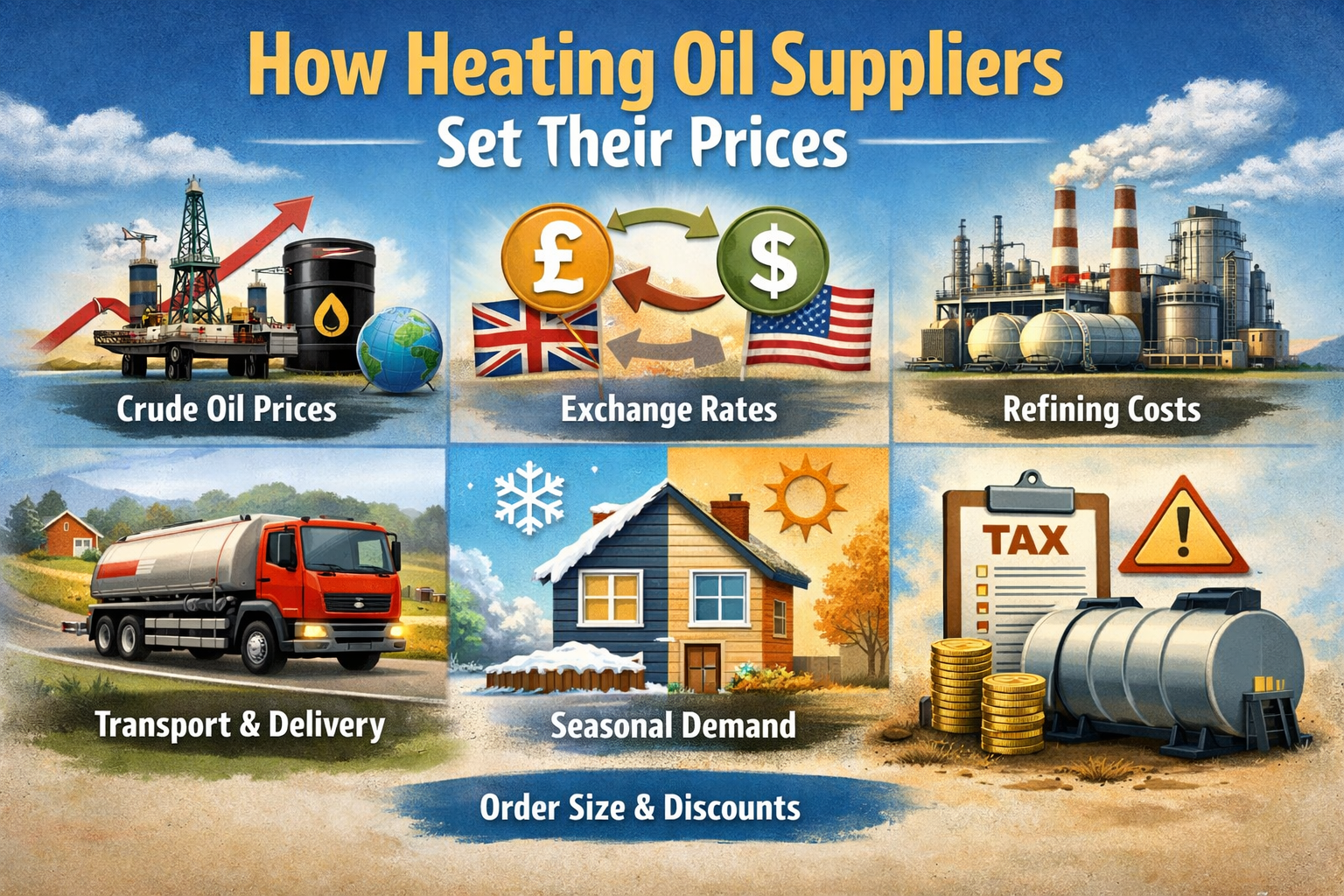
If you heat your home with oil, you’ll know the price can feel like it changes overnight. One week it’s manageable, the next it jumps — and it’s rarely obvious why. After two decades of working with content in energy, housing and consumer markets, I’ve learned that heating oil pricing isn’t random. It’s a moving puzzle with many interconnected pieces — global trends layered on top of local realities.
Below is a clear, human-first explanation of how heating oil suppliers in the United Kingdom actually set their prices — and what that means for you as a customer.
1. It all starts with crude oil markets
Heating oil begins as crude oil. When crude prices rise, the foundation cost of every oil product rises too.
Crude is traded globally, influenced by:
- Geopolitical tensions
- Decisions from large oil-producing nations
- Production levels and supply interruptions
- Global demand from transport, industry, and heating
- Speculation in financial markets
UK suppliers don’t control this part. They buy refined heating oil downstream, but their initial wholesale cost is still chained to the price of crude.
What it means for you: If the news reports turbulence in global oil markets, expect knock-on price changes to reach your local supplier sooner rather than later.
2. Refining and processing costs
Crude oil has to be refined into usable heating oil. Refineries carry major costs — labour, energy, technology, compliance and maintenance.
Those costs fluctuate, particularly when:
- Refineries shut for maintenance
- Energy costs rise
- New environmental regulations increase processing complexity
All of this is baked into the price suppliers pay before they ever speak to you.
3. Exchange rates: the pound matters
Even though the UK imports large volumes of fuel, oil is mostly traded in US dollars.
When the pound weakens against the dollar, UK importers pay more for the same oil. If the pound strengthens, prices can ease — although not always as fast as consumers would like.
Suppliers track foreign exchange rates daily, because those shifts alter their wholesale costs.
4. Transport, storage and logistics
Heating oil isn’t delivered by magic. It is transported, stored, insured, and moved again.
Suppliers factor in:
- Lorry fuel costs
- Driver wages and staffing
- Insurance and fleet maintenance
- Storage tank costs and safety inspections
- Local road conditions and delivery distance
Remote rural areas, hills, bridges, and difficult access points can increase delivery costs per litre. Two customers ordering the same quantity in different locations can legitimately pay different prices because of logistics.
5. Order size and delivery frequency
One of the biggest pricing levers is volume.
Larger drops usually cost less per litre because the supplier spreads their transport and handling costs across more product. Very small top-ups tend to be more expensive per litre.
Some suppliers offer:
- Bulk-buy discounts
- Group buying schemes
- Scheduled delivery plans
These options help smooth supplier logistics — and they often pass part of that efficiency back to you in price.
6. Seasonal demand patterns
In the UK, heating oil demand surges in autumn and winter. When demand spikes:
- Suppliers compete harder for limited wholesale product
- Delivery schedules become tighter
- Prices trend upward
Conversely, summer months often bring quieter order books and more relaxed supply pressures — sometimes leading to lower prices.
A seasoned tip: When possible, topping up outside peak winter can reduce your annual spend.
7. Competition in your local area
Heating oil is a competitive business. Where several suppliers operate in the same region, pricing tends to be sharper. In more isolated regions, suppliers may have less competition, and prices reflect that market reality.
However, price isn’t the only factor suppliers balance. They also compete on reliability, delivery speed, safety track record and customer service — all of which have costs attached.
8. Taxes, duties and regulation
Heating oil used for domestic heating is taxed differently from road fuel, but regulations still shape the final price you see.
Compliance involves:
- Environmental standards
- Safe storage and spill prevention
- Licensing and reporting obligations
When regulations tighten — for example, to reduce emissions — suppliers may face new costs, and eventually those ripple through to consumers.
9. Risk management and hedging
Some suppliers hedge — meaning they lock in prices on future oil purchases to reduce risk. This helps them avoid sudden spikes, but hedging itself has a cost.
Suppliers try to strike a balance:
- Too little hedging exposes them to volatile swings
- Too much hedging risks paying over market rates if prices fall
Their risk strategy influences how stable (or reactive) their retail pricing appears.
10. Payment terms and cash flow
Cash flow is the lifeline of any heating oil supplier. They may offer:
- Pay-on-delivery
- Monthly payment plans
- Budget accounts
- Direct debit discounts
Plans that reduce their risk of unpaid bills are often rewarded with slightly better pricing. Late payments and high credit risk push costs upward, and that cost spreads across the customer base.
Why prices differ between suppliers — even on the same day
Two companies can buy oil from the same terminal and still quote different prices. Reasons include:
- Different delivery networks and efficiencies
- Different hedging strategies
- Varying overhead costs and profit margins
- Stock bought on different days at different wholesale prices
- Different appetite for discounts or special offers
The important takeaway: variation isn’t always “mark-up greed”. It’s often the result of genuine differences in cost structure and risk tolerance.
Smart ways UK households can manage heating oil costs
You can’t control global markets — but you can be a savvy buyer.
- Order early rather than waiting for a winter emergency.
- Compare quotes, but consider reliability and delivery times too.
- Join or form a buying group with neighbours.
- Service your boiler regularly — efficient systems burn less.
- Use a tank monitor to avoid costly last-minute top-ups.
- Ask suppliers about budget plans if cash flow is tight.
Small proactive steps often beat chasing short-term price dips.
The bottom line
Heating oil pricing in the UK isn’t set by a single switch. It’s shaped by world markets, currency shifts, refining and transport costs, regulation, local competition, seasonal demand, and supplier risk strategies.
When you understand those moving parts, the fluctuations feel less mysterious — and you’re better equipped to plan, compare, and buy with confidence. A good supplier will be transparent about why prices change and will help you choose delivery and payment options that suit your household, not just their schedule.