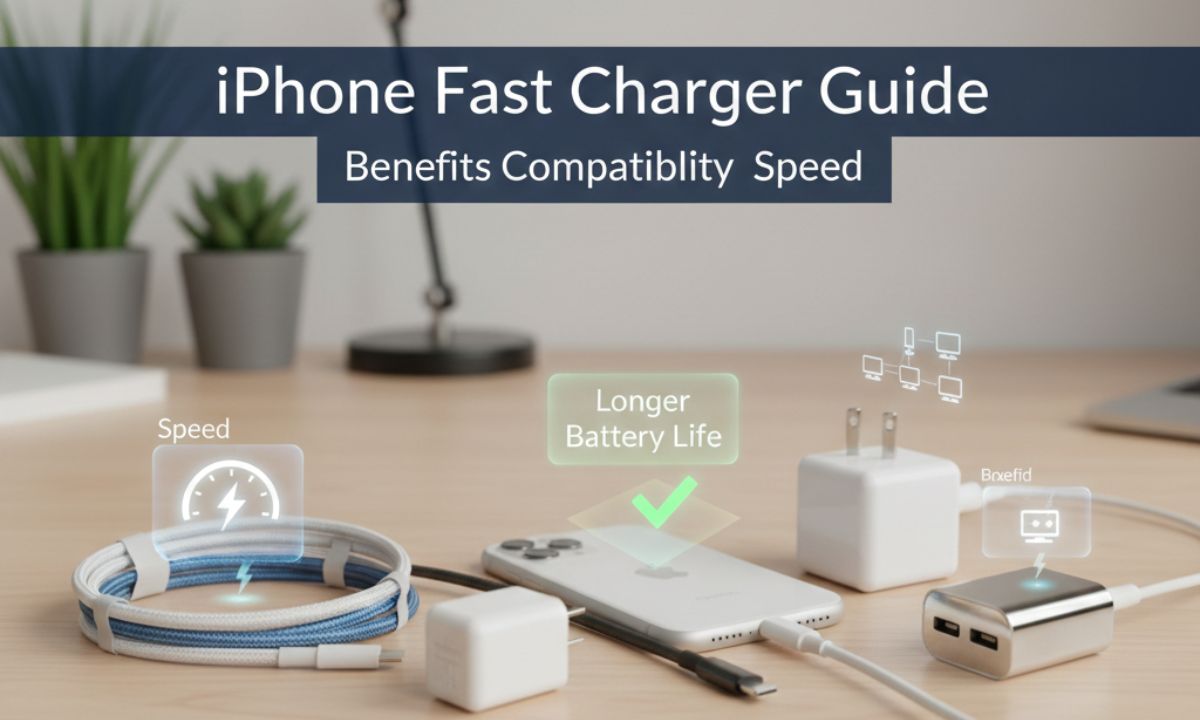
Smartphones have become an essential part of everyday life, and battery performance plays a crucial role in how reliably they support our daily routines. For iPhone users, charging speed is often a top concern, especially when time is limited. This is where the iPhone fast charger becomes highly relevant. Unlike traditional charging adapters, fast chargers are designed to deliver higher power output, significantly reducing the time required to recharge an iPhone.
This article explores what an iPhone fast charger is, how it works, which models support fast charging, and what users should consider before purchasing one. By understanding the technology behind fast charging, users can make informed decisions that enhance convenience, efficiency, and device longevity.
Understanding the Concept of an iPhone Fast Charger
An iPhone fast charger refers to a charging adapter and cable combination capable of delivering more power than the standard 5 watt charger that Apple previously included with iPhones. Fast charging allows compatible iPhone models to charge up to 50 percent in around 30 minutes under optimal conditions.
The key difference lies in wattage. While a standard charger outputs about 5 watts, fast chargers typically provide 18 watts, 20 watts, or more. This higher power output enables quicker energy transfer to the battery, especially during the early stages of charging.
How Fast Charging Works on iPhones
Fast charging on iPhones is enabled through USB Power Delivery technology. USB Power Delivery is a universal charging standard that allows devices to negotiate power requirements dynamically. When an iPhone is connected to a compatible fast charger, the phone communicates with the adapter to draw higher power safely.
However, fast charging does not remain constant throughout the entire charging cycle. iPhones charge rapidly up to about 50 to 60 percent, after which the charging speed gradually slows down. This controlled reduction helps prevent overheating and protects battery health over time.
iPhone Models That Support Fast Charging
Not all iPhones support fast charging. Apple introduced this feature starting with the iPhone 8 series. Below is a general overview of fast charging compatibility:
-
iPhone 8 and iPhone 8 Plus
-
iPhone X
-
iPhone XR, XS, and XS Max
-
iPhone 11, 12, 13, 14, and 15 series
All newer iPhone models support fast charging when paired with the correct charger and cable. Older models released before iPhone 8 do not support this feature, even if a fast charger is used.
Required Accessories for iPhone Fast Charging
To take advantage of fast charging, users need more than just a powerful adapter. The full setup includes two essential components.
Power Adapter
An iPhone fast charger typically requires an 18 watt or higher USB C power adapter. Apple recommends a 20 watt USB C adapter, which delivers efficient charging without unnecessary excess power.
Charging Cable
A USB C to Lightning cable is required for iPhones with a Lightning port. For newer models that use USB C ports, a USB C to USB C cable is needed. The cable must support fast charging standards to ensure safe and effective power delivery.
Using a standard USB A to Lightning cable will not enable fast charging, even if connected to a powerful adapter.
Benefits of Using an iPhone Fast Charger
The growing popularity of the iPhone fast charger is driven by several practical advantages.
Reduced Charging Time
The most obvious benefit is speed. Fast charging can save valuable time, especially for users who rely heavily on their phones throughout the day.
Improved Convenience
With fast charging, short charging sessions become more effective. Even a brief connection to a charger can provide hours of usage, making it ideal for travel and busy schedules.
Optimized Power Management
Modern fast chargers are designed with smart power regulation, ensuring that energy delivery adapts to the device’s needs without compromising safety.
Battery Health and Fast Charging
One common concern among users is whether fast charging harms battery health. Apple addresses this by integrating advanced battery management systems into iPhones. These systems monitor temperature, charging patterns, and usage behavior.
Features like optimized battery charging reduce stress on the battery by slowing down charging when the phone reaches higher percentages. When used with certified accessories, an iPhone fast charger does not significantly degrade battery health compared to standard charging methods.
Choosing the Right iPhone Fast Charger
Selecting the right charger requires careful consideration of quality, compatibility, and safety standards.
Apple vs Third Party Chargers
Apple’s official chargers are reliable and fully compatible, but many third party chargers also perform well. When choosing a third party option, users should ensure it is certified under recognized safety standards.
Wattage Considerations
A 20 watt charger is sufficient for most users. Higher wattage chargers, such as 30 watt or 65 watt adapters, can also be used safely, as the iPhone will only draw the power it needs.
Portability and Design
Compact chargers are ideal for travel, while multi port chargers are useful for users with multiple devices. The right choice depends on individual usage patterns.
Wireless Fast Charging vs Wired Fast Charging
Wireless charging has gained popularity, but it is generally slower than wired fast charging. MagSafe chargers offer improved wireless charging speeds compared to traditional Qi chargers, but they still lag behind wired fast chargers in efficiency.
Wired iPhone fast chargers remain the best option for users who prioritize speed and energy efficiency. Wireless charging is better suited for convenience rather than rapid power delivery.
Safety Tips for Using an iPhone Fast Charger
To ensure safe and effective charging, users should follow best practices:
-
Avoid using damaged cables or adapters
-
Do not charge in extremely hot environments
-
Use certified accessories from reputable manufacturers
-
Keep charging ports clean and free from debris
Following these guidelines helps maintain both device performance and personal safety.
Common Myths About iPhone Fast Charging
Several misconceptions surround fast charging technology.
One common myth is that fast chargers constantly push maximum power into the phone. In reality, power delivery is dynamically controlled by the device itself. Another myth suggests that fast charging drastically shortens battery lifespan, which is not supported when proper accessories and charging habits are used.
Understanding these facts helps users confidently adopt fast charging without unnecessary worry.
Conclusion
The iPhone fast charger represents a significant improvement in charging technology, offering faster, more efficient power delivery for modern iPhones. By understanding how fast charging works, which models support it, and how to choose the right accessories, users can enhance their daily smartphone experience.
When used correctly, fast chargers provide convenience without compromising safety or battery health. As iPhone technology continues to evolve, fast charging remains an essential feature for users who value efficiency and performance in their devices.
