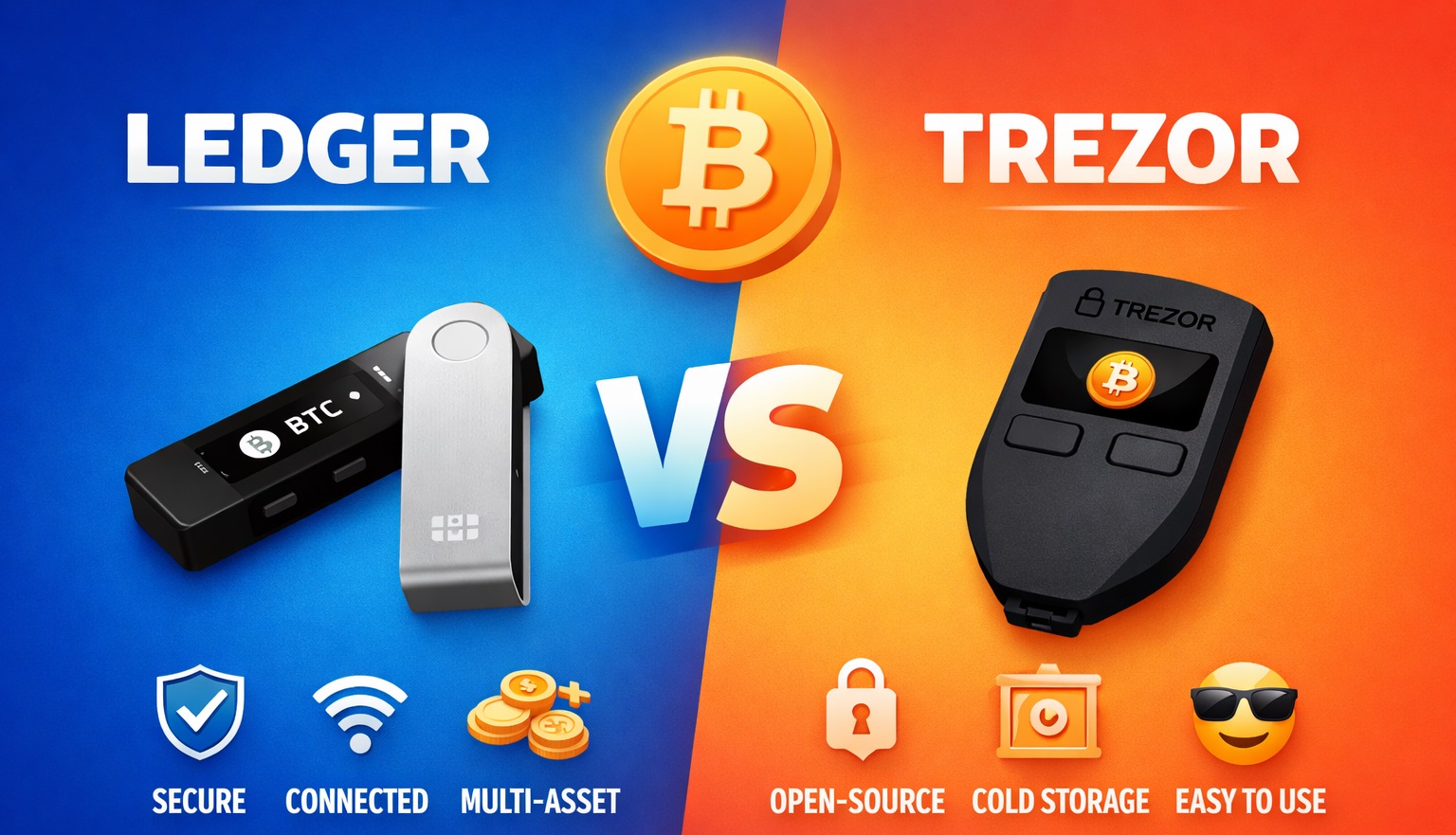
Cryptocurrency investors understand that security is one of the most important aspects of managing digital assets. As Bitcoin adoption continues to grow, more investors are choosing hardware wallets to store their cryptocurrencies safely. Among the most trusted hardware wallets in the market are Ledger and Trezor. These two brands have built strong reputations by offering secure, reliable devices that protect private keys from online threats.
While both wallets are widely used and highly respected, they have key differences in design, security architecture, features, and compatibility. For anyone serious about Bitcoin storage, understanding the differences between Ledger and Trezor can help you choose the right wallet.
In this comprehensive guide, we will explore Ledger and Trezor, compare their features, examine their security models, and determine which hardware wallet is better for Bitcoin users.
What Is a Hardware Wallet?
A hardware wallet is a physical device designed to store cryptocurrency private keys offline. Unlike software wallets connected to the internet, hardware wallets keep your keys in a secure environment, reducing the risk of hacking, malware, and phishing attacks.
When you use a hardware wallet:
- Your private keys never leave the device.
- Transactions are signed offline.
- You confirm transactions directly on the device.
Hardware wallets are considered the most secure method of storing Bitcoin for long-term holders and serious investors.
Overview of Ledger
Ledger is a French cryptocurrency security company founded in 2014. It quickly became one of the most popular manufacturers of hardware wallets thanks to its strong security design and user-friendly interface.
Ledger devices use a Secure Element chip, which is the same type of chip used in credit cards and passports to protect sensitive information.
Popular Ledger Devices
Some of the most widely used Ledger devices include:
- Ledger Nano S Plus
- Ledger Nano X
- Ledger Stax
Each of these devices offers strong security while supporting thousands of cryptocurrencies.
Key Features of Ledger
Some of the main features that make Ledger popular include:
Secure Element Chip
Ledger uses a certified Secure Element chip to store private keys. This chip is resistant to physical attacks and protects your assets even if someone tries to tamper with the device.
Ledger Live Software
Ledger users manage their assets using Ledger Live, a desktop and mobile application that allows you to:
- Send and receive cryptocurrencies
- Manage multiple wallets
- Track portfolio performance
- Install apps for different coins
Wide Cryptocurrency Support
Ledger supports 5,000+ cryptocurrencies, including Bitcoin, Ethereum, XRP, Solana, and many others.
Bluetooth Connectivity
The Ledger Nano X offers Bluetooth connectivity, allowing users to manage assets from smartphones without connecting via USB.
Overview of Trezor
Trezor was the first company to create a hardware cryptocurrency wallet. Developed by SatoshiLabs, the first Trezor device was released in 2014.
Trezor focuses heavily on transparency and open-source security. Unlike Ledger, its firmware and software are completely open source, allowing security researchers to review the code.
Popular Trezor Devices
Some of the most well-known Trezor wallets include:
- Trezor Model One
- Trezor Model T
- Trezor Safe 3
These devices are widely used by crypto enthusiasts who value open-source technology.
Key Features of Trezor
Trezor wallets offer several features that appeal to security-focused users.
Open-Source Firmware
Trezor firmware is completely open source. This means anyone can inspect the code to verify that it contains no backdoors.
Trezor Suite Interface
Users manage their assets through Trezor Suite, which provides:
- Portfolio tracking
- Secure transaction management
- Integrated exchange features
- Privacy tools
Touchscreen Interface
The Trezor Model T includes a touchscreen display that allows users to enter PINs and passphrases directly on the device.
Strong Bitcoin Support
Trezor has historically focused heavily on Bitcoin users and includes several features specifically designed for Bitcoin security.
Ledger vs Trezor: Key Differences
Although both wallets aim to secure cryptocurrency, their approach to security and usability differs in several important ways.
Security Architecture
Security is the most important factor when comparing hardware wallets.
Ledger Security
Ledger devices rely on a Secure Element chip, which isolates sensitive information and protects it from both digital and physical attacks.
This chip has been independently certified under Common Criteria security standards, making it extremely difficult to compromise.
However, Ledger firmware is partially closed source, meaning not all parts of the system are publicly auditable.
Trezor Security
Trezor takes a different approach by focusing on transparency and open-source security.
All firmware and software are open source, allowing independent researchers to audit the code and identify potential vulnerabilities.
However, Trezor devices do not use a Secure Element chip, which some security experts believe provides stronger hardware protection.
Ease of Use
Both wallets are designed for beginners and experienced users.
Ledger User Experience
Ledger devices use Ledger Live, which provides a clean and intuitive interface.
Users can easily:
- Install cryptocurrency apps
- Manage assets
- Track portfolio value
- Buy or swap cryptocurrencies
The mobile integration makes Ledger especially convenient for people who prefer managing crypto on smartphones.
Trezor User Experience
Trezor devices are managed using Trezor Suite.
This software focuses heavily on privacy and advanced features like:
- Coin control
- Tor integration
- Advanced transaction customization
The interface is simple but slightly more technical than Ledger Live.
Cryptocurrency Support
Support for cryptocurrencies is another important factor.
Ledger
Ledger supports thousands of cryptocurrencies, making it one of the most versatile hardware wallets available.
Users can store:
- Bitcoin
- Ethereum
- XRP
- Cardano
- Solana
- Avalanche
- Many ERC-20 tokens
Trezor
Trezor supports hundreds of cryptocurrencies, including Bitcoin and Ethereum.
However, some coins supported by Ledger are not available on Trezor.
For investors with diverse portfolios, Ledger generally offers broader compatibility.
Bitcoin Features
Both wallets are excellent choices for Bitcoin storage.
Ledger for Bitcoin
Ledger offers strong Bitcoin support through Ledger Live and external wallet integrations.
Users can connect Ledger devices with advanced Bitcoin wallets such as:
- Electrum
- Sparrow Wallet
These integrations provide additional security and advanced transaction features.
Trezor for Bitcoin
Trezor is widely respected among Bitcoin enthusiasts.
It integrates easily with:
- Electrum
- Wasabi Wallet
- Sparrow Wallet
Trezor also provides strong privacy tools and advanced Bitcoin transaction options.
Backup and Recovery
Both Ledger and Trezor use the same recovery system.
When setting up a device, users receive a 12- or 24-word recovery phrase that allows them to restore their wallet if the device is lost or damaged.
This recovery phrase is extremely important. Anyone with access to it can control your funds.
Therefore, users should:
- Write it down offline
- Store it in a secure location
- Never share it online
Price Comparison
Hardware wallet pricing varies depending on the model.
Ledger Price Range
Typical Ledger device prices include:
- Ledger Nano S Plus – affordable entry-level wallet
- Ledger Nano X – mid-range wallet with Bluetooth
- Ledger Stax – premium device with advanced display
Trezor Price Range
Trezor devices are also available in different price tiers:
- Trezor Model One – budget friendly
- Trezor Safe 3 – mid-range security upgrade
- Trezor Model T – premium touchscreen wallet
Both companies offer options for beginners and advanced users.
Ledger vs Trezor for Bitcoin Users
For Bitcoin holders specifically, both wallets provide excellent security and functionality. Ledger vs Trezor for Bitcoin Users
Why Bitcoin Users Choose Ledger
Many Bitcoin users choose Ledger because of:
- Secure Element chip
- Mobile compatibility
- Large cryptocurrency support
- Integration with many third-party apps
These features make Ledger a good option for investors managing multiple cryptocurrencies alongside Bitcoin.
Why Bitcoin Users Choose Trezor
Some Bitcoin enthusiasts prefer Trezor because:
- Firmware is fully open source
- Privacy features are strong
- Excellent integration with advanced Bitcoin wallets
- Strong reputation among early crypto adopters
For users who value transparency and open-source technology, Trezor is often the preferred choice.
Pros and Cons of Ledger
Pros
- Secure Element chip for hardware protection
- Supports thousands of cryptocurrencies
- Strong mobile integration
- Easy-to-use Ledger Live software
Cons
- Firmware not fully open source
- Bluetooth capability may concern security-focused users
- Limited storage space on some devices
Pros and Cons of Trezor
Pros
- Fully open-source firmware
- Excellent Bitcoin privacy tools
- Touchscreen on premium models
- Strong reputation in the crypto community
Cons
- Fewer supported cryptocurrencies
- No Secure Element chip
- Slightly more technical interface
Which Hardware Wallet Is Better?
The answer depends on what you prioritize.
Choose Ledger if you want:
- Maximum cryptocurrency compatibility
- Mobile device support
- Secure Element hardware protection
- A beginner-friendly interface
Choose Trezor if you want:
- Fully open-source security
- Advanced Bitcoin privacy features
- Transparent firmware development
- A device focused primarily on Bitcoin users
Both wallets are excellent choices for protecting cryptocurrency.
Final Thoughts
Hardware wallets remain the gold standard for securing cryptocurrency, and both Ledger vs Trezor have proven themselves as trusted leaders in the industry.
Ledger stands out for its advanced hardware security and broad cryptocurrency support, while Trezor excels in transparency, open-source development, and strong Bitcoin privacy features.
For most users, either wallet will provide excellent protection for Bitcoin and other digital assets. The best choice ultimately depends on your personal preferences regarding security design, usability, and supported cryptocurrencies.
As cryptocurrency adoption continues to grow, using a hardware wallet like Ledger or Trezor is one of the smartest steps investors can take to safeguard their digital wealth.