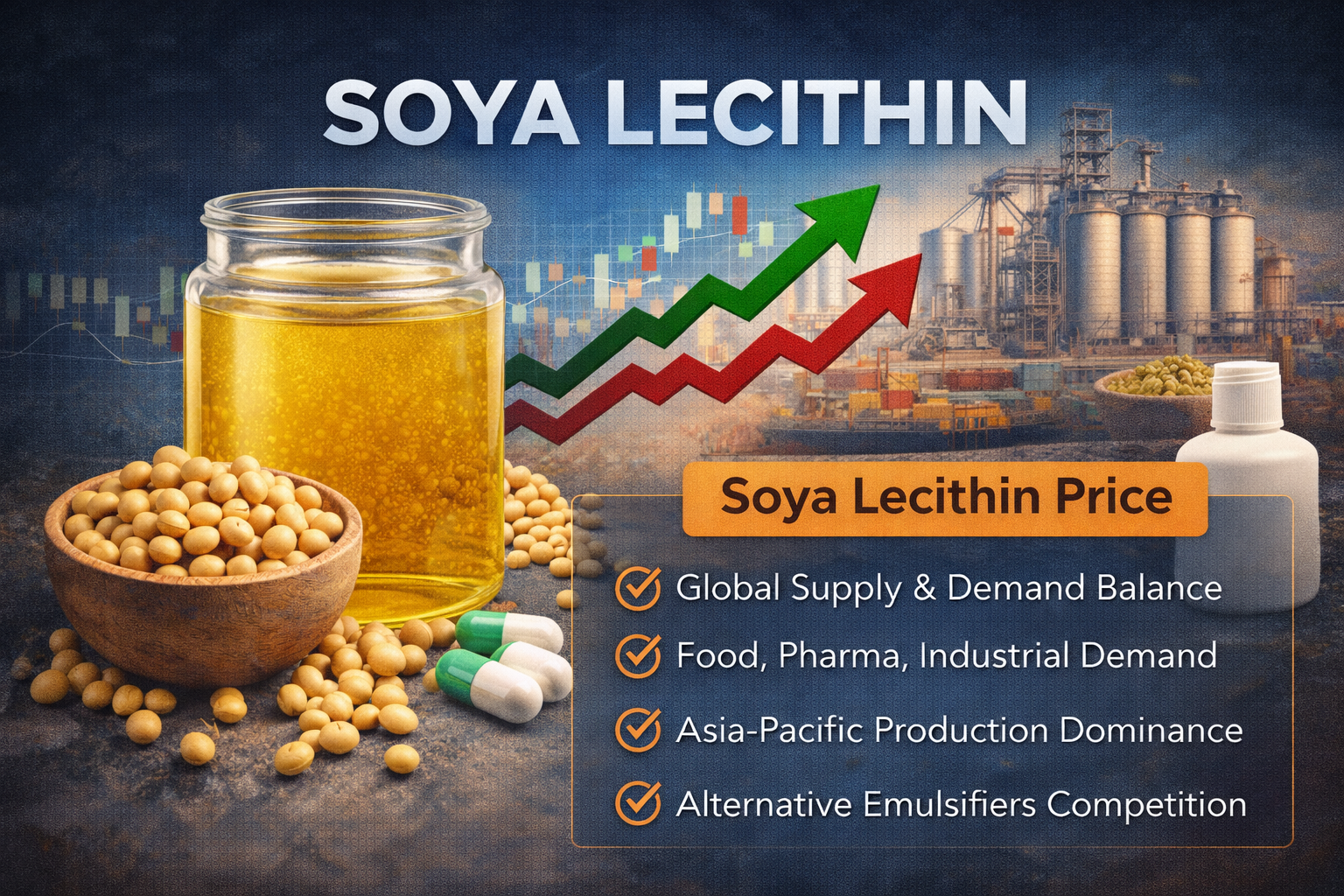
Soya lecithin is a versatile natural emulsifier extracted from soybeans widely used across food, pharmaceutical, cosmetic, nutraceutical, and industrial sectors. Owing to its ability to stabilize oil-in-water mixtures, enhance texture, and improve product shelf life, soya lecithin remains an indispensable ingredient in processed foods, confectionery, bakery, dietary supplements, and even industrial formulations.
Understanding the Soya Lecithin Price and Soya Lecithin Price Trends is essential for manufacturers, procurement teams, traders, and analysts in these key industries. Prices are shaped by supply-side variables like soybean crushing volumes, production costs, and logistics, as well as demand influences such as food processing activity, health-oriented ingredient adoption, and global economic shifts.
Global Soya Lecithin Price Trends: An Overview
Recent Pricing Patterns
According to industry data for the quarter ending September 2025, the Soya Lecithin Price in the Asia-Pacific (APAC) region, especially China, showed a downward movement of approximately 2.82% quarter-over-quarter, with average prices around USD 1125 per metric ton (FOB Tianjin). This was driven by oversupply, elevated inventories, and soft global demand.
In Europe, particularly in the Netherlands, prices increased modestly by around 0.89% overall during the same period, with average CFR Rotterdam figures near USD 1093 per metric ton. This reflected restocking activity and occasional logistical tightness.
North America also saw subdued pricing conditions with moderate softness due to competitive pressures from ample domestic supply and export competition. Meanwhile, weak downstream demand and elevated inventory kept prices from showing strong upside.
Historical Quarterly Movements
Earlier in 2025, the APAC spot price for soya lecithin dropped significantly from April through June, reflecting a notable decline of about 11.83% quarter-over-quarter, driven by oversupply and weak demand from food and feed sectors. European spot pricing similarly trended downward during Q2 2025 with an approximate decline of 12.75%. These broad bearish movements illustrate how oversupply and global competitive forces shaped Soya Lecithin Price Trends during the mid-year period.
Key Factors Influencing Soya Lecithin Pricing
Feedstock and Production Costs
The main upstream driver of soy lecithin pricing is soybean availability and processing economics. Soya lecithin is a by-product of soybean oil extraction; consequently, high soybean crushing rates often increase lecithin output, leading to elevated supply. During periods of strong crushing activity, as seen in mid-2025, inventories build up rapidly, exerting downward pressure on Soya Lecithin Price.
Production costs are also influenced by energy prices, packaging expenses, and labor costs. While lower soybean meal and oil prices can ease cost pressures, energy and freight costs exert upward influence when they climb.
Global Supply and Logistics
Transportation and export logistics materially impact pricing. High port throughput and normalized freight trends helped accelerate shipments but also amplified competitive pricing as exporters sought to clear stocks. This dynamic was particularly evident in China’s export market during late 2025.
Conversely, logistical friction in certain European pockets has occasionally tightened offers, reinforcing short-term price support in select quarters.
End-Use Demand Patterns
Food & Beverage Sector: This remains the largest consuming category of soya lecithin, where it acts as a natural emulsifier in bakery, confectionery, dairy analogues, and snack foods. Rising processed food consumption globally directly supports demand for soya lecithin.
Pharmaceutical and Nutraceuticals: Lecithin’s role in capsule formulation, lipid carriers, and dietary supplements contributes to stable demand pathways, although this sector grows more slowly than food.
Industrial and Personal Care: Makeup, lotions, paints, and coatings industries use lecithin for emulsification and compatibility functions. While generally a smaller volume relative to food demand, these applications still contribute to overall consumption.
Competitive Pressure and Alternative Emulsifiers
The emergence of alternatives like sunflower and rapeseed lecithin, particularly in European markets, has introduced competitive pricing pressures. Some food manufacturers are exploring these substitutes to meet organic or allergen-free product goals, subtly moderating demand for soya lecithin and influencing pricing trajectories.
Track Real Time Price of Soya Lecithin Price
https://www.chemanalyst.com/ChemAnalyst/PricingForm?Product=Soya%20Lecithin
Regional Market Dynamics
Asia-Pacific: The Production Hub
Asia-Pacific, led by China and India, dominates global lecithin production due to robust soybean crushing infrastructure and cost-efficient operations. However, overcapacity has periodically caused inventory gluts, leading to downward pressure on Soya Lecithin Price Trends.
China particularly exemplifies this, where sustained high crushing and export orientation generated oversupply, compelling suppliers to lower export quotes to secure orders.
Indonesia and Vietnam also contribute to global supply, often leveraging favorable currency moves and export incentives to maintain competitiveness.
Europe: Balanced Consumption with Logistical Nuances
Europe’s market typically experiences tighter supply-demand balance than APAC, partly due to slower food and industrial demand growth. Seasonal restocking and selective buying activity in key ports occasionally provided short-term price support, marginally lifting the Soya Lecithin Price during specific quarters.
However, overall demand softness and significant inventory overhang continued to cap large upward movement. Alternative emulsifier adoption further limited price rebound strength.
North America: Stable but Competitive
North America’s soya lecithin market benefits from large domestic soybean production and established crush infrastructure. Stable logistics and domestic supply helped moderate extreme price swings. Still, competitive offers from international origins and inventory levels exerted downward bias on overall pricing.
Demand here remains consistent, particularly from the food and beverage industries, though it has not surged dramatically enough to offset global oversupply trends.
Supply Chain and Trade Influences
Global trade dynamics, including currency fluctuations and export incentives, shape competitive positioning. For instance, elevated inventories in major producing regions have led exporters to adopt flexible pricing structures to maintain market share, contributing to softer Soya Lecithin Price in recent quarters.
Freight normalization and improved port throughput have increased shipment efficiency but also heightened competitive pressures by expanding the range of available supply.
Future Outlook and Forecast
Market data suggests a cautiously optimistic long-term outlook for soya lecithin. While short-term pricing remains influenced by oversupply and inventory cycles, anticipated seasonal demand spikes—especially around holiday periods—and periodic restocking could temper bearish trends. Analysts predict modest price recovery where demand rebounds, particularly in Q4 and early 2026, as food processing sectors increase procurement.
Additionally, evolving consumer preferences for clean-label, natural, and non-GMO ingredients may offer value uplift to certain premium lecithin segments, potentially supporting Soya Lecithin Price stabilisation for certified grades.
Conclusion
The global Soya Lecithin Price landscape has recently experienced downward and mixed movements, driven by oversupply, high inventories, subdued demand, and competitive pricing strategies from exporting regions. The Soya Lecithin Price Trends reflect these dynamics, with periodic regional variations influenced by restocking patterns, logistics, and demand cycles.
Asia-Pacific remains the central production and export hub, while Europe and North America act as significant consuming markets with stable but competitive pricing environments. End-use sectors such as food processing, pharmaceuticals, and industrial emulsification continue to underpin demand, even as alternative emulsifier adoption and macroeconomic uncertainties exert pricing pressure.
Looking ahead, moderate price recovery is possible as seasonal demand improves, inventories adjust, and downstream industries resume incremental procurement. Strategic sourcing, supply chain efficiency, and responsive pricing will remain key for industry stakeholders navigating this evolving market.
