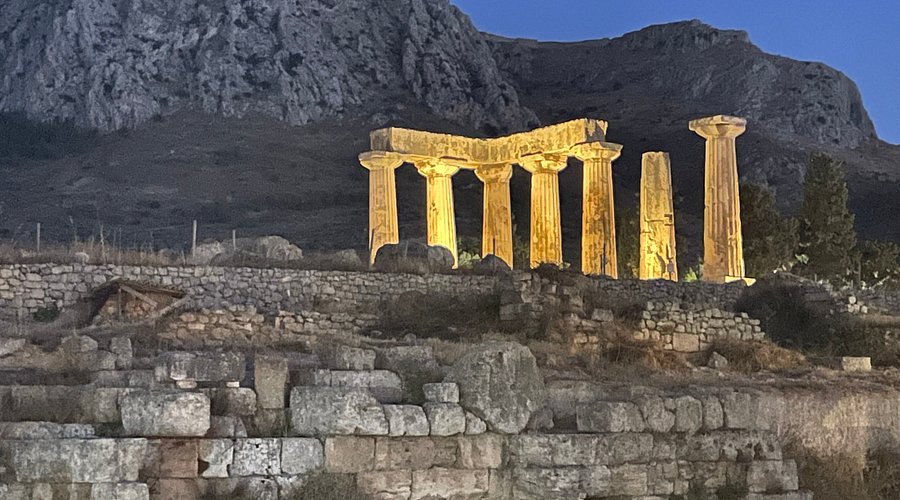
The Temple of Apollo stands as one of the most powerful symbols of ancient Greek spirituality, culture, and architectural brilliance. For centuries, it served as the spiritual heart of the ancient Greek world, attracting pilgrims, rulers, philosophers, and generals who sought divine guidance before making life-altering decisions. Even today, the ruins of the Temple of Apollo inspire awe, reflecting the depth of Greek mythology and the sophistication of ancient engineering.
The Sacred Setting of Delphi
Delphi occupies a dramatic location on the slopes of Mount Parnassus, overlooking the fertile valley below. Ancient Greeks believed Delphi to be the center of the world, marked by the sacred stone known as the omphalos. This belief elevated the Temple of Apollo beyond a regional shrine into a pan-Hellenic religious center. City-states from across the Greek world contributed treasuries, monuments, and offerings, transforming Delphi into both a spiritual and political hub.
The natural surroundings played a vital role in the sacred atmosphere of the temple. Towering cliffs, flowing springs, and mist-covered valleys created a sense of divine presence. Pilgrims arriving at Delphi experienced not only a religious journey but also a profound emotional and psychological transformation, reinforcing Apollo’s authority as a god of truth and clarity.
Mythological Origins of the Temple of Apollo
According to Greek mythology, the site of Delphi was originally guarded by the serpent Python. Apollo, seeking to establish his oracle, defeated Python and claimed the sanctuary as his own. This myth symbolized the triumph of order over chaos and reinforced Apollo’s role as a civilizing force. The Pythian Games, one of the four major Panhellenic athletic festivals, were established in Apollo’s honor and held near the temple every four years.
These mythological foundations were not mere stories but deeply ingrained beliefs that shaped rituals, architecture, and social practices. The Temple of Apollo became the stage where myth and reality merged, where gods communicated directly with mortals through prophecy.
The Oracle of Delphi and the Power of Prophecy
The most famous feature of the Temple of Apollo was the Oracle of Delphi. At the heart of the temple, the Pythia, a priestess chosen from local women, delivered Apollo’s prophecies. Seated on a tripod above a sacred chasm, she entered a trance-like state and spoke cryptic messages believed to be inspired by the god himself. These pronouncements were interpreted by priests and delivered to those seeking guidance.
Rulers consulted the oracle before wars, colonization efforts, and major political reforms. Ordinary citizens sought answers about marriage, health, and prosperity. The ambiguous nature of the prophecies added to their mystique, encouraging careful interpretation and reflection. The oracle’s influence extended far beyond religious matters, shaping the political and cultural trajectory of ancient Greece.
Architectural Evolution of the Temple
The Temple of Apollo was not a single structure but a series of temples built and rebuilt over centuries. The earliest temple, constructed in the 7th century BCE, was made of wood and later replaced by stone structures as architectural techniques advanced. Earthquakes, fires, and invasions repeatedly destroyed the temple, but each reconstruction reflected the resilience and devotion of the Greek people.
The most famous version of the temple, built in the 4th century BCE, exemplified classical Doric architecture. Massive limestone columns supported a triangular pediment adorned with sculptural reliefs depicting Apollo’s myths. Inside, the adyton, or inner sanctum, housed the oracle and sacred objects, including the omphalos stone.
Symbolism and Artistic Significance
Beyond its religious role, the Temple of Apollo was a masterpiece of artistic expression. Sculptures, inscriptions, and dedications filled the sanctuary, each carrying symbolic meaning. One of the most famous inscriptions, “Know Thyself,” was engraved at the temple entrance, reminding visitors of the importance of self-awareness and humility before the gods.
Statues of Apollo portrayed him as youthful, harmonious, and idealized, reflecting Greek values of balance and beauty. These artistic elements influenced generations of sculptors and architects, leaving a lasting legacy on Western art and aesthetics.
Political and Cultural Influence
This unique role positioned the Temple of Apollo as a stabilizing force in a fragmented political landscape.
Philosophers such as Socrates and Plato referenced Delphic teachings in their works, highlighting the temple’s intellectual influence. The oracle’s declaration that Socrates was the wisest man in Greece famously prompted his philosophical mission of questioning assumed knowledge.
Decline and Rediscovery
With the rise of Christianity in the Roman Empire, pagan temples gradually lost their prominence. The Temple of Apollo was eventually closed, and its stones were reused in later constructions. Over time, the sanctuary was buried beneath earth and forgotten.
Modern archaeological excavations in the 19th century rediscovered Delphi, revealing the temple’s foundations, inscriptions, and artifacts. These discoveries transformed scholarly understanding of ancient Greek religion and society, allowing historians to reconstruct the rituals and daily life associated with the sanctuary.
The Temple of Apollo in Modern Times
Today, the ruins of the Temple of Apollo are a UNESCO World Heritage Site and one of the most visited archaeological landmarks in Greece. Visitors from around the world walk among the columns, imagining the voices of ancient pilgrims and the echo of prophetic words. The site continues to inspire artists, writers, and travelers, serving as a bridge between the ancient and modern worlds.
The temple’s enduring appeal lies in its universal themes: the search for meaning, the desire for guidance, and the balance between fate and free will. These concepts remain relevant, ensuring that the legacy of Apollo and Delphi continues to resonate.
Spiritual Legacy and Philosophical Meaning
The teachings associated with the Temple of Apollo emphasized moderation, wisdom, and harmony. Apollo was not a god of excess but of balance, and this principle was reflected in the Delphic maxims. These ideas influenced ethical thought and contributed to the development of Western philosophy.
Even in ruin, the temple conveys a sense of sacred order. Its alignment with the landscape and its carefully proportioned design reflect an ancient understanding of harmony between humanity, nature, and the divine.
Greece Real Estate: Investing in a Land of History
Beyond its cultural treasures, Greece has become an increasingly attractive destination for real estate investment. The country offers a unique combination of historical significance, Mediterranean lifestyle, and growing economic opportunities. From coastal villas overlooking the Aegean Sea to modern apartments in historic cities, Greek real estate appeals to both investors and lifestyle buyers.
Government initiatives such as residency programs for foreign investors, combined with competitive property prices compared to other European markets, have boosted interest in Greece real estate. Owning property in Greece allows individuals to connect with a land shaped by monuments like the Temple of Apollo, blending ancient heritage with modern living.
Conclusion
The Temple of Apollo remains one of the most profound symbols of ancient Greek civilization. As a center of prophecy, art, politics, and philosophy, it shaped the ancient world in ways that continue to influence modern thought. Its ruins tell a story of faith, resilience, and the enduring human quest for knowledge and meaning.
Standing at Delphi, surrounded by mountains and history, the Temple of Apollo reminds us that civilizations may rise and fall, but the pursuit of wisdom and harmony is timeless. This sacred site, etched into the soul of Greece, continues to illuminate the path between the past and the present, inviting each generation to listen, reflect, and seek truth.