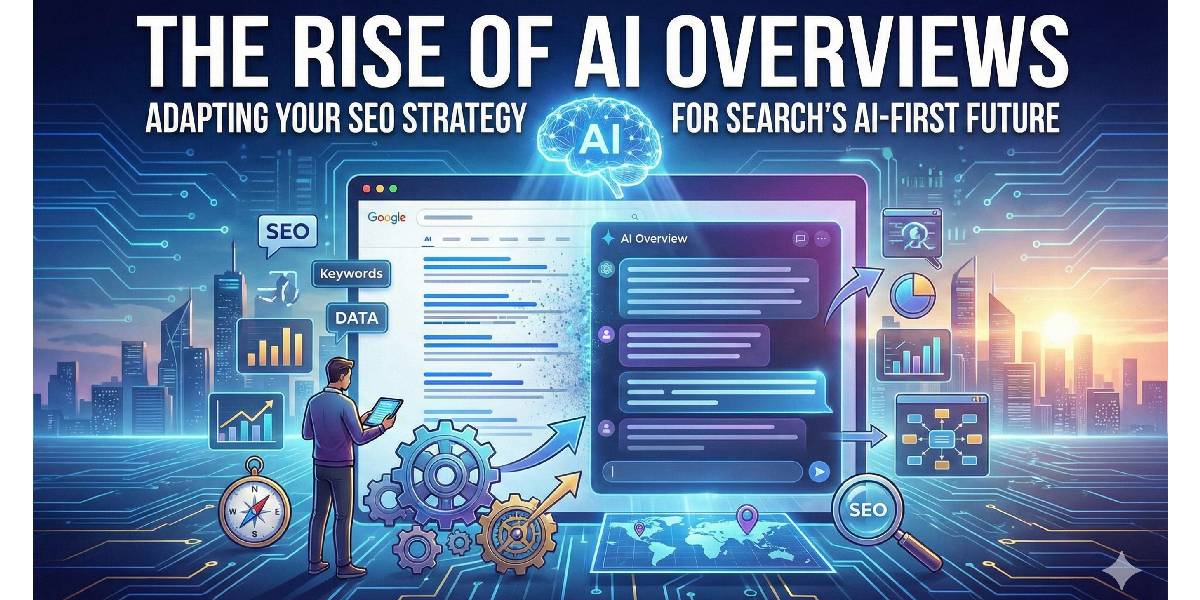
Search engines are undergoing the biggest transformation since the introduction of mobile-first indexing. With the rise of AI Overviews, search is no longer just about ranking blue links;it’s about becoming a trusted source that artificial intelligence can understand, summarize, and recommend.
Google’s AI Overviews (formerly Search Generative Experience) are reshaping how users interact with search results. Instead of scrolling through multiple pages, users increasingly receive instant, AI-generated answers at the top of the SERP. This shift presents both challenges and massive opportunities for businesses willing to adapt their SEO strategies.
In this article, we’ll explore what AI Overviews are, how they impact traditional SEO, and; most importantly; how you can future-proof your SEO strategy for an AI-first search ecosystem.
What Are AI Overviews and Why Do They Matter?
AI Overviews are AI-generated summaries that appear at the top of search results, pulling information from multiple trusted sources across the web. Instead of simply ranking pages, search engines now synthesize knowledge and present concise, contextual answers.
This matters because:
Users get answers without clicking multiple links
Organic click-through rates (CTR) are changing
Only authoritative, well-structured content is referenced
Search engines prioritize understanding over keywords
SEO is no longer just about ranking; it’s about being selected by AI as a reliable source.
How AI Overviews Are Changing User Search Behavior
AI Overviews are accelerating a shift that’s been building for years:
1. Fewer Clicks, Higher Intent
Users often get answers immediately, but when they do click, they are more informed and have higher intent. This means fewer visits; but better-quality traffic.
2. Conversational Queries Are Dominating
Search queries are becoming longer and more conversational:
- “What’s the best SEO strategy for small businesses?”
- “How does AI affect SEO rankings?”
AI understands context better than exact-match keywords, which means your content must, too.
- Authority Wins Over Volume
Publishing more content is no longer enough. AI Overviews prioritize:
- Credibility
- Accuracy
- Contextual relevance
- Clear topical authority
Why Traditional SEO Alone Is No Longer Enough
Traditional SEO focused heavily on:
- Keyword density
- Backlinks
- Page-level optimization
While these still matter, AI-first search introduces new ranking signals, including:
- Semantic depth
- Entity relationships
- Content clarity
- First-hand expertise
Websites that rely solely on outdated tactics risk losing visibility; even if they rank well today.
Adapting Your SEO Strategy for an AI-First Future
To remain competitive, businesses must evolve their SEO strategies to align with how AI understands and evaluates content.
1. Build Topical Authority, Not Just Keywords
AI Overviews favor websites that cover a topic comprehensively, not superficially.
Instead of writing one blog post per keyword, build topic clusters:
- Pillar pages covering broad subjects
- Supporting articles answering related sub-questions
- Internal links that show topical depth
This signals to AI that your website is a trusted knowledge hub, not just a keyword-targeting site.
2. Optimize for Entities and Context
Search engines now think in terms of entities (people, brands, services, locations) rather than just words.
To optimize for this:
- Use consistent brand and service naming
- Add schema markup where relevant
- Clearly define who you are, what you do, and who you serve
- Mention related entities naturally within content
For example, businesses offering seo services in Pakistan should clearly associate their content with digital marketing, search engine optimization, local markets, and industry expertise; helping AI understand relevance and authority.
3. Focus on Answering Real Questions
AI Overviews are designed to answer questions. Your content should do the same.
Best practices include:
- Clear subheadings that mirror search queries
- Direct, well-structured answers in the first few lines
- Use of bullet points, tables, and summaries
- FAQ sections that address common concerns
Think less like a marketer; and more like a teacher.
4. Improve Content Clarity and Readability
AI prefers content that is:
- Easy to parse
- Logically structured
- Written in plain, professional language
- Avoid:
- Keyword stuffing
- Overly complex sentences
- Fluff without substance
Clear writing improves both AI comprehension and user trust; a win-win for modern SEO.
5. Demonstrate Experience, Expertise, Authority, and Trust (E-E-A-T)
E-E-A-T is no longer optional; it’s foundational.
Strengthen it by:
- Publishing original insights and case studies
- Including author bios with real credentials
- Citing reliable sources where appropriate
- Keeping content updated and accurate
- AI Overviews heavily favor content that demonstrates real-world experience, not generic summaries.
The Role of Technical SEO Agency in AI Overviews
Even the best content won’t perform if search engines can’t properly crawl and interpret it.
Key technical factors include:
- Fast page load speeds
- Mobile optimization
- Clean URL structures
- Proper internal linking
- Structured data (schema markup)
AI relies on clean technical foundations to extract and summarize content accurately.
How Backlinks Are Evolving in an AI-Driven Search Landscape
Backlinks still matter; but their quality and context matter more than ever.
AI evaluates:
- Relevance of linking sites
- Editorial placement (not footers or spams links)
- Brand mentions (linked or unlinked)
- Topical alignment
Guest posting on authoritative, niche-relevant websites is becoming one of the most effective ways to build AI-trusted authority; especially when backlinks are placed naturally within high-value content.
Measuring SEO Success in the Age of AI Overviews
Traditional metrics like rankings and traffic are still useful; but they’re no longer the whole picture.
New indicators of success include:
- Brand visibility in AI-generated answers
- Growth in branded search queries
- Engagement metrics (time on page, scroll depth)
- Conversions from high-intent traffic
The goal is not just to rank; but to be recognized and referenced.
Preparing for What’s Next in AI-First Search
AI Overviews are just the beginning. The future of search will likely include:
- Deeper personalization
- Multimodal results (text, images, video, audio)
- Predictive and intent-based discovery
- Fewer SERP clicks, higher-quality interactions
Businesses that invest now in future-ready SEO will gain a lasting competitive edge.
Final Thoughts: SEO Isn’t Dead; It’s Evolving
The rise of AI Overviews doesn’t signal the end of SEO;it signals its evolution.
Success in an AI-first future depends on:
- Content depth over content volume
- Authority over algorithms
- Clarity over cleverness
- Strategy over shortcuts
Brands that adapt their SEO strategies to align with AI-driven search behavior will not only survive; but thrive.
If you’re serious about long-term visibility, investing in high-quality content, strong technical foundations, and authoritative link-building; such as through expert-led seo services in Pakistan, can position your business at the forefront of search’s AI-powered future.